2013年9月26日星期四

2013年9月25日星期三
Natural Pest Control - Fleas and Ticks
Ah – summer. And along with the great weather and days at the beach and gardening and all the good stuff, we have - these guys…

…and with them, inevitably, to one degree or another, comes this.

this

and this

No one is happy, least of all your dog.
To make my position clear at the start; I avoid pesticides at all cost. I seek always to “First Do No Harmâ€. However, I will also not leave an allergic, miserable animal suffering if natural therapies are not working. If a dog has a flea allergy and is miserable, I will use one round of a topical veterinary pesticide – yep, that’s right – and get him or her out of misery. Dogs with flea allergy can develop hot spots, can suffer miserably with even a couple of fleas, let alone an infestation. The products are unpleasant but effective and I have never had to use them 6 months running as the package insists. I’ve done one treatment – ONLY with a healthy dog, not pups, seniors or dogs with health conditions – and that buys us some breathing room. Each case has to be addressed individually; some people swear by DE (diatomaceous earth) – I won’t use it because I have an asthmatic cat and am very sensitive myself to any respiratory irritant. (More on the pros and cons of all these therapies, to follow). Some people swear by garlic, but I have never seen it work ALONE – most will say “along with a good diet and etc etc, garlic helped reduce fleas†– well, who can say it was the garlic? Studies have repeatedly shown no effect from garlic, and feeding it in sufficient quantity to alleviate a flea issue poses problems of it’s own.
Neither do I like brewer’s yeast (can cause bloating and gas) additional B1 (won’t hurt in moderate doses but again, not a single study has ever shown efficacy) – all that said, I have found things that help, are gentler than Advantage, but they require diligence and application, or we’re back to scratching all night long.
To start; if there is an infestation you have to clean out the whole house – vaccuum, and treat with SOMETHING, and if DE works for you, it’s worth a try. If it’s a minor issue and your dog is not overly miserable, just scratching periodically, I’d wash him well with a good natural shampoo, and there are many kinds available now, or you can make your own; flea comb daily (you can get flea combs at any pet store) treat the area he sleeps in with herbal flea powder, and make a spray with apple cider vinegar and any number of herbs – I use (any combination of) yarrow, calendula, rose, lavender, sage, nettle, basil, thyme and St. John’s wort with *maybe* 2 drops of rose geranium oil to a liter – but I don’t like essential oils anywhere the dog can lick them off, so I often just macerate the dry herbs in vinegar for a couple of weeks and strain. If you spray it make sure you don’t get any in his eyes! I also use acv rinses after bathing and sometimes make a large herbal infusion to pour over him as a last rinse after bathing.

For me, good diet has to be the foundation of a healthy dog, so make sure you’re feeding one of the following;
1) a properly balanced home made raw diet
2) a properly balanced home made cooked diet
3) a premium kibble with fresh food enhancements( tripe, cooked veggies, sardines, yogurt)
Address any food intolerances/sensitivity your dog may have. Feed as wholesome a diet as possible but be aware( how can you forget, as I’m forever going on about this) that fresh foods alone won’t necessarily provide a full balanced diet; carnivore nutrition is different from ours and your dog will not thrive on a home made diet that is low in calcium, iodine, D3, zinc etc (as many of these diets are). If you’re already feeding a premium food or home made diet, consider adding a probiotic, something along the lines of spirulina, a general herbal tonic, a little apple cider vinegar as long as there is no history of either stones or crystals in the urine, and some fish oils (not cod liver oil, but any good quality fish body oil).
Some more on dietary supplementation here:
http://thepossiblecanine.wordpress.com/2011/05/22/supplements-101/
I consider most dogs with flea allergy to be “hot†and like to use fish oils, anti inflammatory and cooling herbs throughout the year and provide some immune system regulation as well. Many dogs who run hot and react like this also have sensitive bowels, are reactive or just generally hyper, and can be helped with TTouch and massage as well as diet, supplements and herbs.

If you have to resort to Frontline or Advantage just do it the once and use liver support right after it – I like milk thistle with burdock, and chlorella, and a lowered protein/higher fiber diet for about 3 weeks following a treatment. Homeopathic Thuja may help as well although this is not my own area of expertise.
Takeaway message; a “cooling†diet may help, and we will talk a lot more about using foods to heat or cool the body – but most definitely make sure your dog’s diet is optimal. Adding in Omega3 fatty acids in the form of fish body or krill oils can help. If you do use a pesticide, detox your dog – or put more accurately, feed and supplement to support the body’s ability to excrete the toxin.

GARLIC – #1 Natural remedy
Again – a lot of people will say, garlic is the solution – and I’d just add, you can try adding a LITTLE to your dogs’ food, but some considerations (and please know there have been many studies showing no effect, in controlled scenarios).
1) garlic can irritate the stomach, so use with food only, please
2) Smaller dogs , I would avoid it altogether (under 20 pounds)
3) The problem with garlic and onions is the initiation of something called Heinz body anemia; you do have to feed a fair quantity to cause this illness but it is life threatening:
http://www.peteducation.com/article.cfm?c=1&aid=2414
http://www.ncbi.nlm.nih.gov/pubmed/15634869
Here’s a review of the standard treatments (natural) for flea treatments – I tend to agree with much of this, except the “perceived toxicity†of veterinary treatments – well, hhhmm, they ARE toxic! But so can be essential oils and garlic etc, and much less effective. I try never to use the Advantage, but if my dog is scratching himself raw (as was the case with my own dog two years ago) I get him some relief and then address the situation as non-toxically as possible.
http://csuvets.colostate.edu/pain/Articlespdf/Natural%20Approaches%20for%20Flea%20Control.pdf
My view on garlic is simple. It can upset the stomach fed raw – it *can* cause serious illness in vulnerable dogs, and it’s a potent blood thinner which may or may not be desirable for your canine friend. My sense of it is, the amount required to be repellant to FLEAS is too much for the average dog to tolerate. Whenever I’m considering a supplement or herb I assess the individual dog, and do a risk/benefit analysis – garlic for me doesn’t make sense. Most people who use garlic are also feeding very high quality diets and not over vaccinating etc, so the good immune system and ability to repel an infestation is not related to the garlic, but to the genetic makeup and overall health of the individual.
But to be clear; Frontline and Advantage are NOT INNOCUOUS and I don’t like to EVER use them – but I will, one dose, to get a miserably suffering dog out of that state. Allergic dogs only. All others can be handled – more or less – with diligent attention to the environment, diet, and regular bathing, rinsing and flea combing.
Gameplan
1) You have to keep cleaning the bedding, vaccuming floorboards, daily. Rent a steam cleaner if you can. Diatomaceous Earth works well for some folks and others don’t agree. I wouldn’t use it if you have asthma or any lung sensitivity. But many swear by it.
2) Health of the dog, as in strong immunity which starts with a wholesome and balanced diet, is key.
3) I don’t much like garlic, brewer’s yeast or B1, because I don’t think they work. But of these, B1 is probably the most harmless. I like to give this as a complex, so if you’re going to try that, add a plain B50, not a stress formula,not a time-released. Just a Bcomp 50. If it works – let me know.
4) Wash and fleacomb your dog regularly. You can use herbal rinses, lemon water, or herb-infused apple cider vinegar, or plain acv.Make sure your dog doesn’t have raw open sore areas before you pour vinegar or lemon on her – in these cases, I use rose, calendula and lavender with a little bit of aloe vera. I generally just take a Tablespoon or two of each, place in a Mason jar or any container that holds about a liter of water, and pour boiling water overtop. Cover, let sit four hours, then rinse the dog. With safe, cooling and vulnerary herbs like these you can make it stronger, and do it often. Marshmallow leaves, sage leaves, a little yarrow and mugwort are all nice ideas too and won’t burn the skin.NOTE: please try even these mild herbs INDIVIDUALLY at first; experience has taught me to make an infusion of one at a time, and then swab a little on the tummy. I’ve rarely ever seen a reaction, but I HAVE seen a couple, and better you know that before you pour the offending herb all over your already itchy dog!
5) The same herbs that we use in the water-infusions can be powdered and mixed with arrowroot and clay to create a safe flea repellant powder. This can be sprinkled on bedding, or combed through the dog’s fur right after bathing and drying. Because he or she will probably lick the powder, make sure you use only gentle herbs you know your dog does not react to. Again, I use calendula, rose, lavender, sage and yarrow, often with a little bit of mugwort. I am wary of Essential Oils, although most dogs are probably ok with very small amounts of the milder oils (think flowers, mostly!) I weigh the probably benefit against the possible cost – and usually, I leave them out. I NEVER use them near anyplace a cat will sleep – and in my house, that’s pretty much everywhere.
6) Search your dog thoroughly after any outing where he might have picked up a tick. Then remove it. Remove it properly:http://www.vet.bc.ca/site/view/54224_Removeticks.pml
Now, as I am behind schedule and wanted to get this up for everyone before Christmas, I’m going to wrap up with a few Links – not what I normally like to do, but I’ve dug up some good ones for you.
The first one is from a DVM, she explains the flea cycle very well, so that’s important. She’s also a proponent of DE, garlic, brewer’s yeast and B1. 
http://www.motherearthnews.com/Sustainable-Farming/1985-05-01/Natural-Flea-Control.aspx
Cedarcide: when I asked on my discussion (Facebook) group about what people are using, this product came up over and over. I decided to take a look, and I think it;s worth considering. http://www.cedarcidestore.com/Remove_Ticks.html
Nematode: Jury’s out on this one, but I thought I’d include it for your consideration: http://www.motherearthnews.com/Sustainable-Farming/1985-05-01/Natural-Flea-Control.aspx
In summary; I still consider Dr. Pitcairn’s article to be one of the most balanced, with regard to natural flea control. And, he likes garlic and brewer’s yeast.
http://www.canadasguidetodogs.com/health/fleas_pitcairn.htm
And I wish you a happy, flea-and-tick free, summer!

2013年9月24日星期二
Tick"s And Flea"s Not Just A Summer Time Problem Pest
OSU Tick and Flea Control Has charts and pictures to help you identify tick’s and fleas.
This Information is Valid anywhere you find ticks or fleas.
Flea and Tick Control Tips
for Dogs and Cats
Tulsa County
O.S.U. Cooperative Extension Center

Common Dog Tick
Family pets bring great happiness to our lives. However dogs, cats and their owners suffer great discomfort when fleas and ticks enter the picture. So here’s the scoop on managing fleas and ticks.
Both ticks and fleas can be a year-round problem in Oklahoma. Various species of ticks exist here and, as a result, are never all hatching at one time. Fleas persist due to so many pets living indoors, providing an ideal climate for year-round breeding of this insect pest.
With recent breakthroughs in flea and tick control, pets can lead happy pest-free lives.
Flea and tick control can be achieved by using Integrated Pest Management or (IPM) techniques. This means using good sanitation, such as mowing yards and vacuuming homes, to reduce flea and tick populations. It also means understanding the flea life cycle. Although adult fleas make up only 5% of a flea infestation, pesticides have traditionally targeted this part of the life cycle. The remaining 95% consists of eggs, larvae and pupae. Flea offspring must be targeted if they are to be controlled or eliminated.
WHY CONTROL FLEAS AND TICKS?
Fleas are not just a nuisance to us and our pets. They also carry intestinal parasites, such as the dog tapeworm, that can be passed on to the animal. A single flea bite can cause flea- allergy dermatitis on sensitive pets, leading to serious skin infections. Ticks carry many diseases that affect both humans and pets. Heavy populations of these blood sucking pests weaken animals. Older, less vigorous animals suffer more quickly from fleas and ticks.
THINKING LIKE A FLEA
Our worst flea pest is the cat flea ( Ctenocephalides felis ). Fleas need a blood meal to survive. Their favorite hosts around the house and yard are dogs, cats, squirrels and other warm blooded mammals. If people are being bitten by fleas in a house where pets are present then a very high population is present. For every six fleas seen, there are 300 adult fleas actually present. If animals are not present, fleas will opt to hop onto humans. They thrive best in indoor climates.
The presence of adult fleas is just the tip of the iceberg. There are actually many more flea eggs, larvae and pupa just waiting to become adults. Targeting only adult forms of fleas is not at all effective. Long-term, effective flea control is best achieved by use of products that target flea adults and their young.
Flea adult taking a blood meal, excreting bloody material that dries to become “flea dirtâ€.
Fleas can be controlled with a three step program of treating the pet, their sleeping areas and the moist, shady areas outside of our homes.

Common Deer Tick
Residents living in rural areas should check pets daily for tick infestation. Examine the entire animal, especially around the ears and face. Some ticks, such as the Brown Dog tick, can be found in specific areas of the animal. The brown dog tick adult is most often found in the ears and between the toes. After their eggs hatch, larvae and nymphs are found in the long fur at the back of the neck.
Wash pet bedding in hot, soapy water and thoroughly clean areas frequented by pets, vacuuming carpeted areas and mopping hardwood and tile floors. Treat premises with products labeled for indoor use. Newly hatched fleas live most successfully indoors as they prefer areas out of sunlight, temperatures of 70°-90° F. and high humidity.
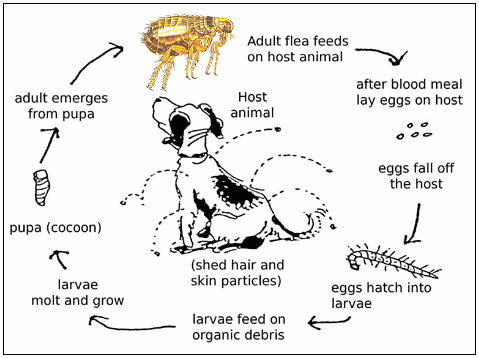
Flea eggs drop into carpet and hatch into larvae. These larvae live on organic debris that is in carpeting. They also survive between the cracks of hardwood floors and along baseboards. After feeding for several days, they become a pupa, wrapped in a silken cocoon that is pesticide resistant.

Common Wood Tick
Use an outdoor flea and tick control product in problem areas. Note that methoprene breaks down quickly outdoors. Use products containing pyriproxyfen as an outdoor insect development inhibitor.
If you get time Please visit Miclelle L new blog and leave her a comment so she will know someone besides me has visited her new blog. Thanks Tweedyland’s Blog
Don’t be shy. Leave me your comment(s)
2013年9月23日星期一
Home Remedy For Repelling Ticks & Fleas

It is that time of year again!! Fleas and ticks are starting to be reborn just to terrorize us and our beloved animals.
However, there is good news!! You do not have to go broke treating your animals, yourself or your yard to repel these nasty boogers. You can make your own using natural ingredients at half the cost. Below are a few ways to keep the ticks off you, your pets and your yard.
Ticks HATE Garlic so as my Grandmother and Ben Franklin use to say…. “An ounce of prevention is greater than a pound of cure.“ Plant garlic in your yard, around your yard or anywhere you do not want the ticks to live. Not only will these deter them from your yard, you will also have fresh garlic when you need it. You can also eat raw garlic or take garlic tabs so it is in your blood. They can smell it and will not attach themselves to you if garlic is in your system. (Garlic tabs are safe for your dogs as well.
- You can either use neem oil or soak neem leaves in hot water and then apply this on the skin.
For Pets; Prepare a general flea and tick spray by mixing 2.5 ml (1/2 ounce) of organic neem oil with 1-2 ml (1/4-1/2 ounce) of mild soap or detergent and 2 cups water. For a stronger solution if there is a problem or the dog will be going into deep bug country, mix 5 ml neem oil, 2 ml mild soap or detergent and 2 cups water. Use warm, not hot, water to dissolve the oil. Mix water and soap first and then slowly add neem oil for flea and tick control. Add to sprayer and use immediately. Discard after use. Neem oil is unstable and breaks down after 8 hours. Mix new each time.- Place a few drops of neem oil on palms and simply rub hands through your pet’s fur for effective flea and tick control. Neem oil is best used this way for dogs, only, not for cats. For sensitive dogs, dilute the neem oil 1:10 in a light carrier oil like almond or jojoba and rub palms first. Then run hands thoroughly through the dog’s coat for natural, effective flea and tick control.
Warnings
Caution is advised when using neem oil on animals that are breeders or about to be bred. Use neem oil at half strength for flea and tick control.
Do not treat cats with concentrated neem oil that is left on the skin. Using neem leaf tea is far safer for felines. Â
- Tea Tree oil is a great repellent. Once mixed, you spray it on the skin or fur and rub in. I also make sure and pray it on our shoes and pant legs if we are going camping or into the woods so we don’t carry home any piggy back riders.
- To make; Mix two ounces of tea tree oil in water and pour it in a spray bottle. Spray this regularly on your skin.
- You can also Spray your yard area with this mixture.
Other effective natural remedies:
- Natural herbs; Lavender oil, Lavender plants, Lemon Grass, Peppermint or citronella are all very effective in keeping fleas off your yard. We make sure to have some every year and we have not had to use chemicals on our yard/ house or body for fleas, ticks or mosquitoes in 3 years now.Â
- A few more ways to repel fleas and ticks; eucalyptus, myrrh, rosewood, or Lemon.
- Lemon; Take 6 lemons and cut in half. Boil these in a quart of water and steep for a few hours. Strain the solution and pour it into a spray bottle. Spray the solution on the pet’s fur but avoid the eyes.
These are just a few of the simple ways you can prevent an infestation of fleas or ticks in your living area and make the family pet a happy go lucky Fido instead of a miserable, itchy one.
Please feel free to leave ideas and other remedies in the comment section below!!
HOW TO PROTECT YOUR DOG FROM TICKS AND FLEAS

Last winter was memroable to say the least. It snowed every other week, often several times in one week and was bitterly cold. We spent most of our mornings rising early to shovel a path out of our driveways. We grew accustomed to the couch and the TV and hibernated like bears. This winter on the other hand, was unseasonably warm. This allowed us to prematurely pull out our T-Shirts and tank tops and enjoy the outdoors, unencumbered by snow, icy sidewalks or thick coats. The only problem was that two tiny creatures were also benefiting from the warm weather: the tick and flea! Since we experienced a mild winter, the tick and flea season has been longer this year. Be on the lookout for those tiny critters and consider our advice to protect your canine from fleas and ticks this season, and all year round.
CRITTER IDENTIFICATION

Ticks:
There are three different types of ticks prevalent in New Jersey: the deer tick, the lone star tick, and the american dog tick. Deer ticks are the smallest of the three and are black in color. The deer tick is a transmitter of Lyme disease. The american dog tick is much larger in size, looks like a white or grey kernel of corn when engorged, and is the tick that is most frequently encountered. The american dog tick can be a transmitter of the Rocky Mountain Spotted Fever. The lone star tick can be identified by the white spot on its back but is less common in this area.
Fleas:
Fleas appear as small red or black dots about the size of a pinhead and can be found on any part of the body, but tend to congregate around the neck and tail area of cats and dogs.
Â
PREVENTATIVE MEASURES

Ticks tend to favor wooded areas with overgrown grass. After every hike or walk with your dog, take the time to diligently scan his or her body for ticks. Use a brush or a flea/tick comb to slowly comb through the hair. If any fleas or ticks were on your dog’s body, it would get trapped in the fine tines of the comb. It is important to speak with your veterinarian about the best preventative measure you can take, whether it’s Frontline, K9 Advantix or any other lotion your vet recommends. Be consistent and apply the preventative medication once every month or as often as your vet recommends.
CURES
Ticks:
What do you do if you find a tick on your dog’s body? Use tweezers to pull the tick straight out, do not twist. Try not to grab the tick’s body but rather the mouth parts attached to your pet. Drop the tick in a jar of alcohol to kill it. If you want to be sure it is not a disease carrying deer tick, bring the tick preserved in alcohol to your local veterinarian to have it examined. Simply flushing a tick down the toilet will not kill it. Clean the bite wound with antiseptic.
Fleas:
Fleas are less dangerous than ticks but are much more annoying. As soon as a flea sucks blood, it is able to reproduce and will soon lay eggs. To completely eradicate fleas from your pet and your home it is crucial to wash all bedding where your dog sleeps in hot soapy water. Vacuum the entire house making sure to focus on baseboards and the corners of every room. Seal the vacuum bag in a plastic trash bag and either freeze it or pour flea powder into the bag to ensure the fleas do not return, then dispose in an outdoor trash receptacle. It may take several weeks to entirely wipe out those pesky fleas, so continue to wash bedding, rugs and pillows and be vigilant with your vacuuming. If these natural solutions prove ineffective after several weeks, it may be time to invite an exterminator over. Make sure that whatever fogger or spray is used contains an IGR, or insect growth regulator, to exterminate the flea in all its life cycles, from larva to adult.

To remove fleas from Fido, wash him or her in hot soapy water. There are many natural remedies out there that you may want to try before resorting to flea shampoos which contain harsh chemicals but may later prove to be necessary. Discuss your options with your veterinarian to determine the best and safest solution for your pet. If needed, Morris Animal Inn does provide flea shampooing.
Armed with these tips, you’ll be able to show any tick or flea whose boss!
Tips on How to Spot Fleas & Ticks on Your Dogs

During the summer months, your beloved pups are more prone to getting fleas and ticks on their bodies. These insects feed on the blood of your mutts and may cause several health problems ranging from allergic reactions to tapeworm infections to other serious tick-driven illnesses.
Here are some tips as to how you can spot fleas and ticks on your dogs:
- Look through your dogs’ fur and see if you can spot any small black specks. If there are a lot more than just a random few, they may be flea droppings.
- If you see small little white specks around the same areas as the flea droppings, those could be flea eggs nestled in your dogs hair.Â
- You may notice your dog is scratching or licking its body excessively. If this is happening, keep and eye out for other flea/tick symptoms.
- You may also want to keep an eye out for more than normal scabbing or hot spots on your dogs’ skin.
- If you and your family members are getting excessive bug bits on your feet and legs, this is definitely a huge warning sign that you may have fleas and ticks in your house.Â
To learn how to safely and surely get rid of fleas and ticks in your house and on your dogs, consult your trusted vet.
Keeping your mutts happy, healthy, and hearty!

Fleas Fever!
Yes, I always have fleas & ticks problem on my own dogs. I’ve gone through the bad, the ugly and the worst. There’s once my house is infested until those little criminals went creeping through my neighbors’ houses. I can hear my neighbor’s aunty screaming top of her lung to avoid her precious grandkids playing near the infected area. I feel so ashamed and bad at this problem.
First of all, let me guide through you about fleas & ticks.
Taken from http://www.petinsurance.com/healthzone/pet-articles/pet-health/~/media/All%20PHZ%20Images/Article%20images/27flea.ashx
Fleas

Taken from http://blog.ecosmart.com/wp-content/ticks.jpg

Taken from http://upload.wikimedia.org/wikipedia/commons/6/63/Ticks_1.jpg
Ticks

We have to know fleas birth cycle in order to understand more.
Fleas go through three cycle of life; larva, pupa, and imago (adult).
The flea life cycle begins when the female lays egg after feeding on blood. Eggs are laid in batches of up to 20 or so, usually on the host itself, which easily roll onto the ground. As such, areas where the host rests and sleeps become one of the primary habitats of eggs and developing fleas. The eggs take around two days to two weeks to hatch.
Flea larvae emerge from the eggs to feed on any available organic material such as dead insects, feces, and vegetable matter. They are blind and avoid sunlight, keeping to dark places like sand, cracks and crevices, and bedding. I found a lot of them hiding between the black lines of ceramic tiles. After another week or two, the adult flea is fully developed and ready to emerge from the cocoon. They may however remain resting during this period until they receive a signal that a host is near – vibrations (including sound), heat, and carbon dioxide are all stimuli indicating the probable presence of a host. I saw wave of fleas run/jump towards my dog’s direction in fast speed when my dog enters my living room.
Once the flea reaches adulthood its primary goal is to find blood in order to reproduce. Adult fleas only have around a week to find food once they emerge, though they can survive two months to a year between meals. A flea population is unevenly distributed, with 50 percent eggs, 35 percent larvae, 10 percent pupae, and 5 percent adults. Their total life cycle can take as little as two weeks, but may be lengthened to many months if conditions are favorable. Female fleas can lay 500 or more eggs over their life.
Taken from http://www.sapestcontrol.com/PestLibPics/Fleas.jpg

Once you understand these, the only way to get rid of the fleas, is to break their life cycle.
More details info can be read at http://en.wikipedia.org/wiki/Flea
Okay, now we know we need to get rid of these pesky fleas & ticks.
What’s the best way or solution?

I used specific shampoo for flea & tick to treat these kind of matters.
Often the shampoo’s label wrote lather up all the fur with shampoo and leave it on them for at least 5 mins, avoid the eyes and the ears area of your dog. The shampoo can’t be reapply after 2 weeks later.
Using these kind of shampoo really does help a lot. Still, it’s not perfect as it say can’t be use near the area of eyes and ears. All the fleas & ticks hide toward the non shampooed area. Bathing with this shampoo doesn’t kill the fleas in one time use. To wait for 2 weeks to reapply products just doesn’t break the life cycle of the fleas & ticks. HOWEVER, I still recommend to bath them with flea & tick shampoo as one of the step to get rid of them.
What’s next?
I know what I’m going to say next going to be a troublesome ways for most of the dogs’ owner. I use flea comb to find the flea from starting of my dog’s nose till the end of the tail. Search at the nook & cranny area like armpits, butt, paws, ears, below the mouth area, etc. Best is to check through every furry place. My crocker doesn’t let me use the flea comb around his face especially eyes area, so I need to have use my fingernail to pluck those fleas & ticks out. For the first time, they might not as willing to let u go so near their eyes. But after a while, the comfort of having no biting/pains caused by fleas & ticks, they are mostly happy to let you to do this kind of action.
Ears have a good type of ear lotion to get rid of the fleas & ticks. You have to apply for few many times till none of them left inside.

How do you kill the fleas & ticks after using the comb to get them out from the dog?
This is a way teach by Nicole. I found it very effective, easy and safe.
Prepare a bucket with at least one quarter or half of water. Just drop the fleas & ticks inside of the bucket, watch them drown while struggling.

I scared just water might not be enough, so I added the water with Dettol solution.
It does kill them faster. Do not throw the bucket of water immediately, at least let it sit in for a day or so.

Sometimes, when the fleas & ticks is too hard to find especially when dog have very thick fur, I shaved them first. I think shaving make it easier to spot the fleas & ticks and can see the skin disease your dog have caused from the bites.
My dog after shaved

Flea Collar for prevention?

Yes, flea collar is very useful and effective. I have tried this solution before but because I have two dogs, my milinois love to bites on crocker’s neck for fun. The flea collar contains toxic material so it’s not good for dog to lick them. Flea collar is best for dog that spend of their time in cage or doesn’t have two dogs love biting each other neck. LoL. Please wash your hand after you put on the flea collar on dogs too.
Is there any easy way?
Yes, using flea & tick drop is quick and easy. It is effective too.
Advantix

Frontline

Frontline combo even kills the egg.
What about the environment?
Bayticol

Bayticol is a super strong solvent and very effective. It need to mix 5ml to 1000ml of water. Just spray to dog’s fur, or bath the dog using the water solution to kill the fleas & ticks. Spraying the environment with this bayticol really works. Attention, please handle with care when mixing the solvent and water.
pressure sprayer sample can be bought at most supermarket.

Flea Powder is also a choice opt by many users.


I personally never use any dog flea’s powder on my dog because my dogs like to lick each other. I remember my father used dog flea powder on the once used to be my puppy before, it works wonder.
Fleas & ticks problem is an issue to be taken seriously. Because it makes your dog sick, have skin diseases, looses fur and health worsen.
Love your dog, kill the ticks!
Post by Bethamy
I’m sharing own my opinion based on my own experiences with the usage of the products. If you found my ways are not helpful, you can look up more ways or read the links below.
http://www.k9web.com/dog-faqs/fleas-ticks.html
http://www.paw-rescue.org/PAW/PETTIPS/DogTip_InsectPrevention.php
2013年9月22日星期日
Natural Remedies for Ticks and Fleas.
No matter how much of a nature lover one can be, it sure is another thing to have these critters on you and your dogs. Fleas are everywhere and though we live in a city, I still battle fleas on my Lhasa Apso. If your dog is allergic to fleas as my dog is, you will especially need to stay on top of your combating tactics when it comes to these bloodsuckers.

 |
| http://www.lowchensaustralia.com/pests/bites2b.htm |
 For those holistic followers the following recipes can be wonderful remedies. Since they are all natural, they will only help repel fleas, ticks and flies etc. and must be applied more frequently as well.
 Â
Herbal Critter Repellent Mix:
Ingredients: Dried peppermint, eucalyptus, bay leaf herbs, marjoram, eucalyptus, rosemary, sage, clove buds.
Procedure: Crush your botanicals well and fill a muslin bag or use it in the cedar chip mixture of your dogs bed. The muslin bags can be placed near your dogs bedding area.
 Tick Spritzer Blend
2 drops of Lavender, Basil, Lemon, Opoponax, Eucalyptus
1 teaspoon apple cider vinegar
1 teaspoon vodka
1 cup of dried marjoram, eucalyptus, rosemary
2 cups of water
 Flea Spritzer Blend
2 drops of cedarwood, lemongrass, rose geranium
1 teaspoon apple cider vinegar
1 teaspoon vodka
1 cup of dried peppermint, eucalyptus, bay leaf herbs
 1- 2 cups of water
Procedure:
Add the essential oils and vodka in a bottle, tighten the lid and shake well. Once the mixture blended (should turn white), add apple cider vinegar. If you have some herbs mentioned above you can make an herbal tea to use in your spritzer.
Boil 2-4 cups of water and remove from heat. Add your dried herbs in the water and let is simmer for 30 minutes. Once cool, drain and use instead of plain water in your spritzer. If you are using an herbal tea, this mixture must be kept in the refrigerator as the herbal teas have the tendency to go bad faster.
Once you have your spritzer you can use this by gently spraying it in to your dogs coat, legs, tummy and back. Rub it in well and apply it as necessary. Do not use any of the essential oils on your dogs face or around nose, ears and eyes. Respect the sensitive nose he/she has and go easy when using aromatic substances such as essential oils.

Checking Your Dog for Fleas and Ticks
Check your dog often for fleas and ticks by play petting and inspecting. I always have the following handy when we are conducing an inspection.
1. Tweezers
2. Jar filled with rubbing alcohol.
3. Tissues
4. Cotton balls
Keep in mind that not all ticks carry a disease causing organism, and just because you had a tick bite does not mean you will get Lyme disease. Even if a tick is a carrier, it’s bite may not always cause the development of disease, but proper caution and care always is crucial in prevention. If you see any abnormal rashes after a tick bite, you should consult your doctor or your dog’s vet immediately.
 Note: Ticks may carry various infectious organisms that can transmit diseases to cats and dogs, including the following (listed with possible symptoms):
babesiosis: lethargy, appetite loss, weakness, pale gums
 ehrlichiosis: high fever, muscle aches
Lyme disease: lameness, swollen joints, fever, poor appetite, fatigue, and vomiting (some infected animals show no symptoms)
tick paralysis in dogs: gradual paralysis, seen first as an unsteady gait from uncoordinated back legs (some infected dogs don’t develop paralysis).” Dixie Farley- FDA Consumer magazine (July-August 1996)
Use a fine-point tweezers. Never squeeze the tick’s body. Try to grab it (with your tweezers) where its mouth-parts enter the skin and pull gently without letting go. It will eventually releases its hold by withdrawing its barbed mouth-part from your skin.Do not try to pull it out within seconds – proper tick removal will take time and needs patience. Keep an eye on any abnormal rashes and consult your doctor if necessary.
Resources:Â www.Home remedies.com
For any questions regarding my blog, please email me at akvicencio@gmail.comÂ
2013年9月21日星期六
Cure for Ticks and Fleas on dogs at Urban Brat
Mumbai, 27 NOVEMBER 2012 – Good news for dog and puppy lovers all across India, especially in and around the areas of city of dreams, Mumbai. Urban Brat, an online pet store in Mumbai has got all the pet care solutions under one roof and that too at the ease of online access. You can view all the products related to dog treats, dog grooming and bathing products like dog shampoo, pet accessories and dog toys etc on www.urbanbrat.com
The quality of the products available at Urban Brat is just the best and these products come from the best brands and meet the highest level of satisfaction for both pets and the pet lovers. This is the reason why they have grown to such popularity in such a little span of time. Moreover the products at Urban Brat though of highest quality standards are available at most affordable costs that would not burn a hole into your pockets. Urban Brat maintains a well managed online cart where you can add the products to your cart, get discounts using special coupon codes, and can even track your order.
The cures and treatments available for fleas and ticks on dog are really effective in curing the puppies and dogs. The ticks and fleas on dogs are the cause of biggest irritation for dogs and puppies. Whereas some ticks and fleas can be avoided by maintaining proper health care habits and taking necessary precautions yet many times it is seen that ticks on dogs are found even with all the precautions and care being taken. These are the ones from which your pup or dog needs to be get relieved.
At Urban Brat products like shampoos, powders, sprays and combs are available for the immediate relief from Ticks On Dogs. Even the products related to cure from fleas is also commendable and worth noticing. All these products are handpicked from best brands and have been trusted by thousands of customers all across the nation. The rates quoted by Urban Brat for anti tick dog shampoos are unbeatable in the market.
Other than cures for fleas and ticks on dogs this online Pet Shop In Mumbai have the widest collection of other dog and pup care products all available under the one roof. Maybe this is the reason Urban Brat is popularly known as one stop solution for all kind of pet accessories and products. Do visit their website www.urbanbrat.com for more detailed descriptions of the products.
Summary
Urban Brat, an online pet shop situated in Mumbai provides different kind of pet health care and daily use products. The cures available for fleas and ticks on dogs and puppies are at very reasonable rates and are highly effective for immediate relief. The quality provided by Urban Brat is unmatched and the price quotes are unbeatable in the Indian market. In simple words Urban Brat is a paradise for the pets and pet lovers. Do visit
Â

How to get rid of dog fleas and ticks
I’m sure all pet lovers hate dog ticks and fleas. They easily multiply and annoy my dogs really bad. Even if you clean your dogs daily, 90% of the time they will have new ones the following day.
Cats and dogs pick up fleas outdoors. These parasites like dry spots such as your wall, your plants, or your trees. Can you just imagine tick infestation during summer?
Here I have listed a few tips on what you can do to get rid of ticks and fleas. These are based from my experience with my dogs.
1) Wash dogs 2 times a week, or once a week at a minimum. Ticks are easily removed when your dogs’ coat are wet.
2) Wash pets bedding every week. Eggs are usually laid where the pet sleeps. This also applies to your bedsheets if your pet sleeps on the bed.
3) If your dog has ticks or fleas, then your home has too. Vacuum carpets, rugs, soft furnishings, and around skirting boards every week; steam-clean carpets and rugs occasionally. Make sure to vacuum under each furniture.
4) Comb your pet regularly (everyday during the summer) using a fine-toothed metal comb. During the summer, it is ideal that your pet’s coat is kept short.
5)Â Consult your vet about treatment options for your pet. I am using Frontline Top Spot. They cost P450-500 per application (for my toy dogs) and are applied once a month.
6)Â Do not squeeze the ticks! They can cause infection to your dogs. Burn them or put them in a plastic cup with 1/4 gasoline. Wash your hands thoroughly after.
2013年9月20日星期五
How to Manage Fleas and Tick on Dogs
Although I’m not a veterinarian to discuss you on topics like this, but I think I have the right to share what I have learned on my researches regarding this topic. Oreo–my dog, Â got infested with fleas and I’m in the process of getting rid of it. So if your interested, read through. 

First and for most, you might be asking how the hell did your dog got this parasites. Well, basically they can have this infestation from stray dogs who happen to be lost in your yard. They can also acquire this from your neighbors infested dogs or in the woods where you went hiking with. Â With my Oreo, he got it from dogs in our neighborhood. Basically, dogs can have fleas and ticks, but you can do something about this to prevent it from infesting your dog.

Fleas and Tick can transmit disease to our dogs. Fleas it cause our dog some allergy called flea allergy dermititis. It is manifested when your dog starts to bite, scratch and fall off their hairs. I’ve seen this with my Oreo. Fortunately, its still not that serious when I found out about this.
With ticks, a lot of disease can be transmitted to your dogs. Lyme disease, rocky mountain spotted fever, tularemia, ehrlichiosis are just a few of them. There are also others that can kill your dog.
Fleas and Tick Management:
Bath your dog regularly. Buy a flea shampoo from the pet shop near you and use it in bathing your dog. Lather thoroughly and deeply through the fur into the skin. Take extra care on areas like behind the ears, neck, ankles and joints. That is most of the time fleas stayed. You can use a flea comb during or after bathing. It will kill the fleas by trapping them in the comb’s fine teeth and dipping it in a soapy water.
Use a dog repellent. There are several dog repellant available at the petshop. Frontline, Mace Brand Mazzule and more.
Clean your house. You should also clean your house regularly to prevent fleas and tick from living there. Vacuum your carpets and floors. Wash those beddings and pillow cases.Â
Clean your yard. Â You clean your yard by trimming your grass short. Leave it just bare ground. You can also use some repellent in your yard just to minimize if not eliminate the parasites. You can also build or repair your fence to avoid stray dogs inside your yard.
Povide your dog with nutritious food. These parasites love to live in a weak and malnourished dogs. Now you don’t want that to happen right? So provide your dog with food less in food coloring and food preservatives. Healthy dog is much more better than a malnourished one.
Now, if anything else fails. Bring your dog to your Veterinarian for further procedures. They surely know what to do with your dog.
2013年9月19日星期四
Fleas, Ticks, Chemicals & Your Dog

But I kept thinking about it. Then I was reading an old magazine that was hanging around the house and there was an article warning people not use PVC shower curtains, and about the dangers of playing with your pets if they use flea and tick collars. So I started poking around the internet and found this warning on 1800PetMeds:
Side effects are uncommon, with less than 1% of dogs showing signs of digestive upsets. It is not advisable to use Revolution in pets that are ill or underweight. Collies and herding dog breeds may have a reaction to the ingredient selamectin if given over the recommended dosage amount. If your dog is a collie or other herding dog breed and your veterinarian has prescribed Revolution, we urge you to monitor your pet for 8 hours and call your vet if your dog displays any signs of weakness, staggering, dilated pupils, trembling, drooling, or pressing his or her head against a wall.
WTF? The weird thing is, most of the warnings I saw on the flea and tick meds were for herding dogs. What’s with that?
So I’m glad winter is coming. At least I’ve got a few months before I have to decide what to do about this… and to talk to my vet. I’ve used PetArmour on the cats with good results (*knock on wood*). But the people on 1800PetMeds don’t seem to be a fan.
Anyone out there have any warnings? Advice? Recommendations?
2013年9月18日星期三
Pets and Pests: How to Combat Fleas and Ticks

By Stacy Mantle
There is nothing more terrifying to a pet owner than happening across a flea or tick on their pet. The first thought that runs through their head is that they must do something immediately. While you do need to take action, you should always be thinking of ways to prevent pests in the first place.
Prevention is the key when it comes to pests such as fleas and ticks. While you may not have them in your home now, there is always a distinct possibility that they are on the way. The best way to prevent pests is to have your home treated with an environmentally friendly, yet effective pest control service. Treating the outside of a home is optimal, and will help in eliminating anything that may show up indoors.
If you do find fleas or ticks in your home, there are a number of steps to follow:
1. Vacuum: Studies show that merely vacuuming the home regularly can eliminate 50% of fleas and ticks. Don’t let waste be stored in a bag. Wrap it in a plastic bag and dispose outside or empty and clean canister after a quick spray of frontline.
2. Laundry: Do lots and lots of laundry. This will help eliminate any current pupae (flea larvae) and help prevent future problems.
3. Treat your pet: Using a nontoxic spray or monthly treatment, be sure to have your pet treated. Be very cautious when choosing a treatment and do your homework. If you’re treating cats or kittens, be careful. They have a tendency to react poorly to these treatments and it’s important to choose one that is nontoxic and approved for use on cats. Read the instructions and never try to use a dog treatment on a cat.
4. Treat bedding: Be sure to vacuum and clean the areas where your pet spends most of their time. Wash bedding, treat with a nontoxic spray or powder, and vacuum often.
With these guidelines, you should be able to prevent and eliminate any future infestations. If you already have fleas, remember that you will need to do this often. Fleas have a 15-day life cycle.
Read more articles by Stacy Mantle
Natural repellent for Fleas and Ticks
    I live in Mississippi, not in the down-home delta where we don’t wear shoes, but I’m not exactly in the most urban part either. We’ve got a bit of a tick problem. People know that if you’re going to deal with a Mississippi summer, you’re going to have to get your dog some flea and tick repellent somehow, but it is a recession and some people just don’t like giving their dog monthly pills. I’m kind of one of those people. I know it’s necessary, but I try to limit it. For instance, I really don’t give heartworm medicine during the winter. You’re supposed to (or they say you are), but I don’t do it. Now, I also have inside dogs. And when the mosquitoes come out, I start giving them heartworm medicine.
     Also, I had a good friend of mine complain about flea and ticks on his dogs the other day (and he really does live in the backwoods of America), so I told him that I would check it out. Naturally, the first place I went is Google – I also looked through two of my really good holistic books.
Natural repellent for Fleas and Ticks:
Apple Cider Vinegar – this can be found at your local grocery store. To use, pour a little bit on a towel and rub it through your dog’s coat, or, the easier way is go get a spray bottle and fill it and just spray your dogs down before you go for walks and things. So every two-three days they can be sprayed down with the apple cider vinegar. Though, the more you spray, the more it should be diluted. It can also be diluted and used for an after-bath leave in conditioner, it is good for the skin and it will also still repel bugs. Double win.
Garlic – Found at your local grocery store. It is not toxic to dogs and most of them really like it. It also repels bugs. To use, just feed it to them, mix it with their food, cook it in, or even just put it on your finger and let them lick it off, however they will take it is fine. It’ll repel because, simply, bugs just don’t like the smell. Just like the apple cider vinegar.
I also found recipes if you have time to make them for sprays and things (I’m a busy person – I stick with the apple Cider and the garlic)
Tick Spritzer Blend:
·        2 drops of Lavender, Basil, Lemon, Opoponax, Eucalyptus
·        1 teaspoon apple cider vinegar
·        1 teaspoon vodka
·        1 cup of dried marjoram, eucalyptus, rosemary
·        2 cups of water
Flea Spritzer Blend:
·        2 drops of cedarwood, lemongrass, rose geranium
·        1 teaspoon apple cider vinegar
·        1 teaspoon vodka
·        1 cup of dried peppermint, eucalyptus, bay leaf herbs
·        1- 2 cups of water
Add the essential oils and vodka in a bottle, tighten the lid and shake well. Once the mixture blended (should turn white), add apple cider vinegar. If you have some herbs mentioned above you can make an herbal tea to use in your spritzer.
Boil 2-4 cups of water and remove from heat. Add your dried herbs in the water and let is simmer for 30 minutes. Once cool, drain and use instead of plain water in your spritzer. If you are using an herbal tea, this mixture must be kept in the refrigerator as the herbal teas have the tendency to go bad faster.
Once you have your spritzer you can use this by gently spraying it in to your dogs coat, legs, tummy and back. Rub it in well and apply it as necessary. Do not use any of the essential oils on your dogs face or around nose, ears and eyes. Respect the sensitive nose he/she has and go easy when using aromatic substances such as essential oils.
(Copied from: http://healing.about.com/od/dogs/a/canineticks_2.htm )
2013年9月17日星期二
How to Prevent Ticks and Fleas in Dogs
Ticks and fleas are a common cause of diseases that afflict dogs. Besides transmitting diseases, tick and flea bites are irritating to the dog causing a lot of discomfort and at times may result in hypersensitivity reactions.
Ticks and fleas are relatively easy to get rid of in dogs that are indoors most of the time. For outdoor dogs especially those used in hunting, this is a different case entirely. Ticks and fleas will commonly be found in long grasses and in forested areas. Some species of these two parasites are host-specific for dogs meaning they would rather suck blood from your dog than you or another domesticated animal.
In preventing infestation by these parasites it is important that you keep your dog away from areas where these parasites are likely to be found such as long grass and forested areas. The lawn in your backyard (if you have one) should be kept at reasonable length and should not be allowed to grow long. Do not let your dog spend a lot of time rolling in the grass or running around in the forest.
For dogs living indoors, the dog should be checked for fleas and ticks every time he comes back from the park, dog show or some other place he might have been exposed. Any ticks or fleas found should be disposed properly. The dog’s sleeping area should be washed at least once a week and the blanket dusted and/or washed.
Some home remedies you can use to keep your dog tick and flea free is mixing apple cider vinegar with an equal amount of water and spraying it on the dog. You can also use lavender oil which is believed to be a natural flea repellent. This mixture can also be applied in the area where the dog is sleeping and in other regions around the house paying special attention to corners, cracks and carpeted areas.
Carpets can be vacuumed every once in a while, any fleas or ticks present will be sucked up by the vacuum. This method only removes the ticks and fleas from the carpet but does some may survive the vacuuming. You can then apply a pesticide on the vacuum bag to kill any parasites that are still alive.
There are commercial products available for control of ticks and fleas. These products can be sued on the dog as well as the environment to kill the various stages of ticks and fleas. Tick and flea control products will come in different formulations; there are spot on applicators, shampoos, sprays, dusting powders and flea collars.
Spot on applications are usually applied on the skin; a common brand that has this form of preparation is Frontline plusTM which is very effective especially in control of fleas.
Shampoos are used to wash the dog, they contain medication that is toxic to ticks and fleas. Aerosol sprays are usually used to kill stages of ticks and fleas present in the environment and may be toxic to you and the dog thus their application has to follow guidelines strictly.
2013年9月16日星期一
EPA Makes Online Information about Protecting Pets from Fleas and Ticks Easier to Find
As a part of the Agency’s effort to build a more user-friendly website, EPA has redesigned its online information about protecting pets from fleas and ticks to make it simpler for visitors to find the information they need quickly and easily. The Agency has reformatted the content using various tools to allow readers to scan content quickly. Additionally, these resources are now easier to read on mobile devices. Visit the Protecting Pets from Fleas and Ticks Resource Directory at http://www2.epa.gov/pets.
2013年9月15日星期日
Poor pet health and fleas and ticks
As the warm weather slowly creeps in, dog owners slowly starts worrying about those tough as well as relentless survivors known as flea and ticks. However, have you ever wondered why some of the cats and dogs have a more severe problem while other pets hardly have any anything to do with these parasites?


The fleas and ticks present in your pet can be a very obvious indicator of the animal’s health. Parasites in general especially fleas attack an unhealthy, weak or a very young animal whose immune system in not functioning at its best. Therefore, the best flea and tick prevention can be reducing yours pet’s susceptibility by improving its health.
The best way for a flea and tick prevention program for your cat or dog is to have a strong immune system. You can start off by providing your pet with proper, species appropriate and nutritious meals. A healthy diet consisting of fresh foods will work wonders in keeping fleasand ticks away. However, steer clear away from processed kibble or canned foods as your pet might have indigestion with them.
The food that you feed your pet should be able to provide all the nutritional components that are deemed to be necessary for all organs as well as systems of a healthy body so as to perform in unison. When the question of providing proper diet to your pet arises, this means looking beyond your own opinions, agendas and needs so as to address the natural needs of the animals that you are responsible to feed and take care of.
Thus, your pets will be raised according to their species and nature. Cats and dogs which are the most favored species of pets and are carnivores need to be fed accordingly so that they are able to maintain optimal health. Only a healthy pet will be able to ward of fleas and ticks so therefore make it your mission today to give your pet that maximum love and care of course through the tender way of his/her stomach.Â
2013年9月14日星期六
The Causes of Dog Fleas and Ticks

Much like any other dog, your lovable canine can be prone to getting fleas. This would perhaps be one of the most annoying situations your four legged best friend can ever deal with. To have parasites feeding on their skin can be harmful to their health. You’d notice this when they continuously scratch themselves to a point where patches of their skin would now be evident due to the hair falling off. Of course, fleas and ticks can also bring about a number of diseases which can affect their health in the long run. As the owner, you would want to make sure that your dog is free of these parasites. In order to do that, however, you will need to identify the reasons as to why they are attacked by fleas and ticks in the first place. Below are some of the causes of pest infestation in dogs.

One of the main reasons as to why dogs get fleas is because they often socialize with other dogs that may have these parasites in the first place. Fleas require a host in order to breed; without one, they’ll die in a matter of two days. Once it has acquired a host, it can breed on a dog’s skin for up to 115 days, which can pose all sorts of health risks to your dog and even your family members. It is because of this that you will want to ensure that your dog, no matter how sad it may be for them, avoids coming in contact with stray dogs or cats. Remember that fleas can also be found in cats, rabbits or even rodents. If you own a number of pets in the house, you might want to see to them not coming anywhere near each other. Fleas are very nimble pests that can easily jump from one host to another.

Dogs get fleas as well due to unclean environments. This can range from a kennel that hasn’t been cleaned for days or even rolling around the ground where a lot of dirt and bacteria is present. Just when you thought your dog needs a bath, they’re actually being infested with fleas and ticks on the skin, leading to a lot of scratching. These nasty pests can cause all sorts of rashes which can grow into something very critical to your dog’s health.

These are some of the causes as to why dogs get fleas. If you’re dealing with flea problems, bathe your dog with flea repelling shampoo and soap. You will also want to get them vaccinated and medicated with the help of a veterinarian.

Bernard Yao invites you to http://www.petsinfoplace.com dedicated to sharing useful information on raising happy and healthy home pets for the online community. Come on by for more great updates on Dog Care.
订阅:
博文 (Atom)